

1.0 Introduction
This report details the findings of a simulated network penetration test conducted to identify and assess security vulnerabilities within the target environment. The primary objective of this engagement was to provide a clear, evidence-based understanding of the identified security risks and to offer actionable recommendations for remediation. The goal of this assessment was to simulate the actions of a determined adversary to provide a realistic evaluation of the organization’s defensive capabilities and overall security resilience.
| Engagement Objective | Description |
| Objective 1: Initial Access | Identify and exploit vulnerabilities to gain initial access to the internal network. |
| Objective 2: Privilege Escalation | Attempt to escalate privileges on compromised systems to achieve administrative-level control. |
| Objective 3: Lateral Movement | Assess the feasibility of lateral movement and pivoting to other network segments. |
| Objective 4: Reporting & Remediation | Document all identified vulnerabilities, their potential business impact, and provide specific, actionable remediation guidance. |
The following section describes the systematic approach used to execute the objectives of this engagement.
2.0 Methodology
A structured testing methodology is of strategic importance in any penetration testing engagement. A systematic approach ensures comprehensive coverage of the target environment and allows for the accurate recreation of attack paths, which is a crucial step for verifying vulnerabilities and implementing effective remediation. The simulated attack was conducted using a phased approach, mirroring the tactics, techniques, and procedures (TTPs) of real-world adversaries.
The engagement followed a four-phase methodology:
- Reconnaissance and Enumeration This initial phase involved gathering information about the target network to identify potential points of entry. Activities included scanning for wireless networks, identifying their configurations, and enumerating services running on discovered internal hosts to build a map of the attack surface.
- Initial Access and Exploitation In this phase, the focus shifted to leveraging the vulnerabilities identified during reconnaissance to gain an initial foothold within the network perimeter. This involved exploiting weaknesses in network protocols and using weak credentials to access internal systems.
- Privilege Escalation and Lateral Movement Once an initial foothold was established, the next step was to elevate user permissions on a compromised system. The goal was to obtain administrative or root-level privileges, which would grant complete control over the host. This compromised system was then used as a pivot point to move laterally and access resources on other, supposedly segregated, network segments.
- Reporting and Remediation The final phase of the engagement involved the documentation of all findings, a thorough analysis of their business impact, and the formulation of strategic recommendations. The goal of this report is to provide the necessary information to remediate the identified weaknesses and enhance the organization’s overall security posture.
The application of this methodology led to the discovery of several critical and high-severity vulnerabilities, which are detailed in the following section.
3.0 Findings and Recommendations
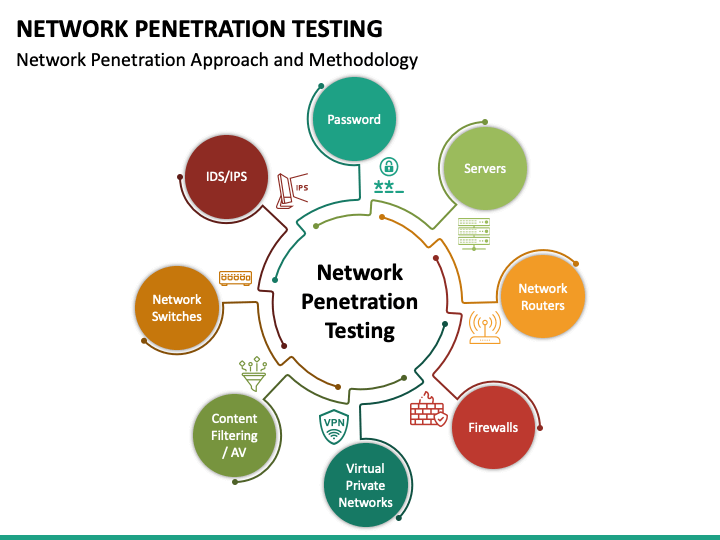
This section presents the technical details of each vulnerability identified during the engagement, categorized by severity. Each finding includes a description of the weakness, a narrative of the exploitation process, an analysis of the potential business impact, and concrete steps for remediation.
3.1. Finding 1: Insecure WPA2 Wireless Network Configuration Allows Initial Access
- Severity: Critical
- Vulnerability Description: The corporate wireless network, identified by the SSID “testnetwork,” is secured with WPA2-Personal (Pre-Shared Key). This protocol is susceptible to a range of attacks that can compromise the network’s confidentiality and integrity. An attacker within physical proximity can execute a deauthentication attack to force legitimate clients to disconnect, allowing for the capture of the WPA2 4-way handshake. This handshake can then be subjected to an offline dictionary attack to crack the network password. Furthermore, WPA2 is vulnerable to Key Reinstallation Attacks (KRACKs) and “Evil Twin” attacks.
- Attack Narrative:
- Using the airodump-ng tool, the “testnetwork” wireless network was identified broadcasting with BSSID FE:6B:64:C9:F6:5E.
- A deauthentication attack was launched using aireplay-ng, forcing a connected client to disconnect and reconnect, which allowed for the capture of the WPA2 handshake for offline cracking.
- Simultaneously, an “Evil Twin” attack was executed. This involves creating a rogue access point mimicking the legitimate corporate network to exploit user trust. A captive portal was used to harvest credentials directly from an unsuspecting user who entered their password (abcdefgh), which was captured in a POST request.
- Business Impact: A compromised wireless network provides an attacker with an initial foothold on the internal corporate network, effectively bypassing perimeter defenses such as firewalls. From this position, an attacker can launch subsequent attacks against internal hosts, leading to a full internal network compromise. This could result in significant operational downtime, theft of sensitive intellectual property, and reputational damage that impacts customer trust and future revenue. This initial access provided the necessary foothold from which to discover and attack vulnerable internal systems, as detailed in the subsequent findings.
- Recommendations:
- Primary Recommendation: Upgrade the wireless security protocol from WPA2 to WPA3. WPA3’s Simultaneous Authentication of Equals (SAE) protocol is inherently resistant to offline dictionary attacks. WPA3 also provides forward secrecy, which protects the confidentiality of previously captured traffic even if the network password is compromised in the future.
- Interim Recommendation: If an immediate upgrade to WPA3 is not feasible, mandate the use of strong, complex passphrases for the existing WPA2 network. A strong passphrase should contain a mix of upper- and lower-case letters, numbers, and symbols. Passphrases should be changed on a regular basis to mitigate the risk of a successful dictionary attack over time.
3.2. Finding 2: Credential Exposure in User Command History Leads to Privilege Escalation
- Severity: High
- Vulnerability Description: After gaining access to the internal network, a Debian Linux host at 192.168.110.129 was compromised using weak credentials (user/password321). A review of the user’s shell history file (.bash_history) revealed cleartext credentials for a privileged MySQL database account. Critically, this database password was reused for the system’s root account, providing a direct path to full administrative compromise.
- Attack Narrative:
- An SSH connection was established to 192.168.110.129 with the credentials user:password321.
- The history command was executed to inspect the user’s previously executed commands.
- Entry #4 in the command history revealed a MySQL connection command containing a username and password in cleartext: mysql -h somehost.local -uroot -ppassword123.
- The discovered password, password123, was successfully used with the su root command to escalate privileges. The id command confirmed the escalation, returning uid=0(root).
- Business Impact: Storing credentials in plain text within shell history files, combined with password reuse, demonstrates a critical failure in secret management. It allows an attacker with low-level user access to bypass all security controls and gain complete administrative control of the compromised host with minimal effort. This immediate escalation to root privileges on a key server provided the attacker with a trusted and powerful launchpad to pivot into segregated network zones, such as the corporate CCTV system.
- Recommendations:
- Implement a Comprehensive Secrets Management Program: Establish a formal program to govern the entire lifecycle of sensitive credentials. This program should include:
- Policy Enforcement: Implement and enforce a strict password policy that prohibits the reuse of passwords across different systems, services, and accounts. Mandate the use of strong, complex, and unique passwords.
- Technology Deployment: Prohibit the practice of embedding credentials in command-line arguments or scripts. Utilize secure methods for managing secrets, such as dedicated secrets management solutions like HashiCorp Vault, environment variables, or application-native credential stores.
- Implement Mandatory, Role-Based Security Training: Implement mandatory security training for all technical staff, including developers and system administrators. This training must specifically address the risks of exposing secrets in shell history, configuration files, and source code.
- Implement a Comprehensive Secrets Management Program: Establish a formal program to govern the entire lifecycle of sensitive credentials. This program should include:
3.3. Finding 3: Sudo Misconfiguration Allows Root Privilege Escalation
- Severity: High
- Vulnerability Description: The user account on the Debian host 192.168.110.129 was configured in the /etc/sudoers file with excessive and insecure privileges. Specifically, the user was permitted to execute the /usr/bin/find command as the root user without requiring a password. Many standard Linux utilities, including find, can be abused to execute arbitrary commands or spawn a shell, creating a simple and effective privilege escalation vector.
- Attack Narrative:
- After gaining initial access as the user account, the sudo -l command was executed to enumerate the user’s sudo privileges.
- The output revealed the entry (root) NOPASSWD: /usr/bin/find.
- This misconfiguration was exploited by executing the command: sudo find . -exec /bin/sh \; -quit. The -exec option within the find command was used to launch a shell (/bin/sh), which inherited the root privileges of the parent find process.
- The id command was run from within the new shell, confirming a successful escalation to uid=0(root).
- Business Impact: Insecure sudo configurations fundamentally violate the principle of least privilege and provide a trivial path for an attacker to achieve full system compromise. An attacker with root access can install persistent backdoors, tamper with system logs to erase evidence, access or exfiltrate all data on the system, and use the compromised host as a trusted platform for further attacks. The ability to alter logs directly impedes forensic investigations and complicates regulatory breach notification requirements.
- Recommendations:
- Establish and Enforce the Principle of Least Privilege Across All Systems: Institute a strategic initiative to ensure all user and service accounts are granted only the absolute minimum permissions required to perform their designated functions. As part of this initiative:
- Mandate a comprehensive audit of all sudoers configurations across the environment. Privileges should be granted on a strict, as-needed basis. Prohibit granting permissions to commands that provide shell escape capabilities.
- Implement Two-Factor Authentication (2FA): As a compensating control, implement 2FA for privileged operations, including sudo commands and interactive logins. This adds a critical layer of security that makes it significantly more difficult for an attacker to leverage a compromised account.
- Establish and Enforce the Principle of Least Privilege Across All Systems: Institute a strategic initiative to ensure all user and service accounts are granted only the absolute minimum permissions required to perform their designated functions. As part of this initiative:
The combination of these vulnerabilities creates a clear and dangerous attack path from the network exterior to full administrative control of internal systems, as summarized in the following section.
4.0 Attack Path Narrative
This narrative synthesizes the individual findings into a chronological, end-to-end attack chain. It demonstrates how an external attacker can methodically progress from a position of zero access to achieving full administrative control over critical internal systems, ultimately threatening physical security assets.
- Initial Compromise: The attacker, positioned physically near the corporate office, targets the “testnetwork” WPA2 wireless network. By deploying an Evil Twin access point with a captive portal, the attacker tricks an employee into connecting and submitting their Wi-Fi password, thereby gaining access to the internal corporate network.
- Internal Foothold: Once on the internal network, the attacker performs a network scan and discovers a Debian Linux server at 192.168.110.129. The attacker successfully logs into this server using weak, guessable credentials (user/password321), establishing a persistent foothold inside the perimeter.
- Privilege Escalation: From this low-privilege user shell, the attacker escalates to full root privileges. This is achieved by exploiting two independent vulnerabilities: discovering a reused root password (password123) stored in the user’s .bash_history file, and leveraging an insecure sudo rule that allows the find command to spawn a root shell.
- Pivoting and Lateral Movement: Now with complete control over the Debian server, the attacker uses it as a “jump host” to pivot deeper into the network. Using a tunneling tool such as chisel or ligolo-ng, the attacker creates a secure tunnel from their external machine through the compromised server. This allows them to bypass internal network segmentation and access a subnet previously believed to be isolated, which houses the company’s CCTV surveillance system.
- Sensitive System Access: The attacker now has direct network access to the physical security infrastructure. This includes the central DVR unit, remote storage servers, and all IP-based cameras. These sensitive assets are now at risk of being disabled, tampered with, or having their video feeds exfiltrated, posing a significant risk to physical security and operational integrity.
This attack path illustrates how a series of seemingly distinct vulnerabilities can be chained together by a determined adversary to orchestrate a major security breach.
5.0 Conclusion
This penetration test engagement successfully demonstrated the existence of multiple critical and high-risk vulnerabilities that expose the organization to significant operational and data security risks. The identified attack path, progressing from an insecure wireless network to the compromise of sensitive physical security systems, highlights how seemingly minor configuration weaknesses can be chained together to produce a major security incident.
The organization must shift from a reactive security posture to a proactive, defense-in-depth strategy. Prioritizing the remediation of these foundational issues—such as enforcing strong, unique password policies, implementing the principle of least privilege, and upgrading legacy security protocols—will provide the greatest return on security investment and measurably improve resilience against the tactics employed by modern adversaries. A committed effort to strengthen these fundamental controls is the most effective way to bolster defenses against real-world attackers.